
Ultrasound / Lower Limb Venous Doppler Ultrasound Scan
Lower Limb Venous Doppler Ultrasound Scan
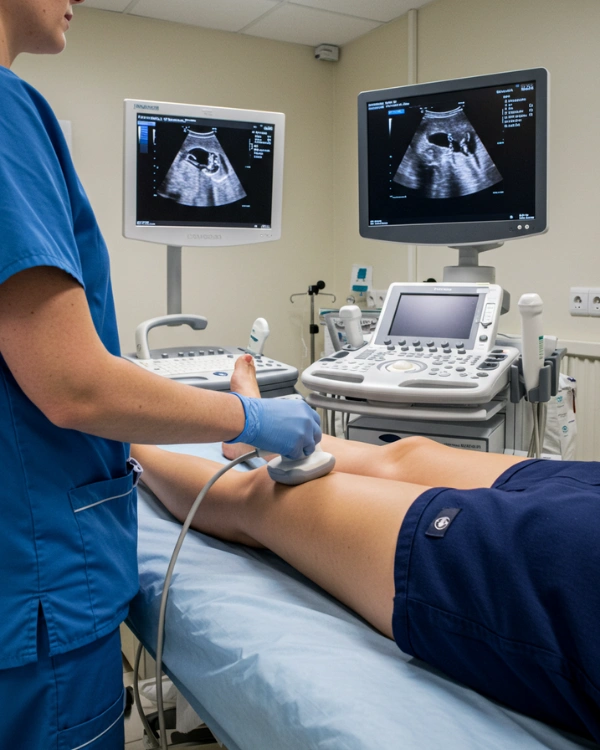
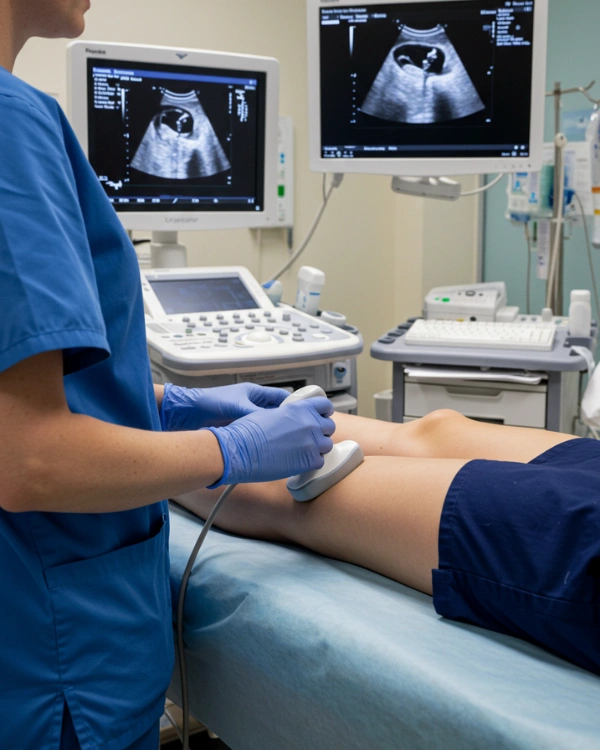
A lower limb venous Doppler ultrasound is a specialised scan used to assess blood flow in the deep veins of the legs, helping diagnose or rule out deep vein thrombosis (DVT). It is a vital test in patients presenting with leg pain, swelling, redness, or immobility.
What is a lower limb venous Doppler scan?
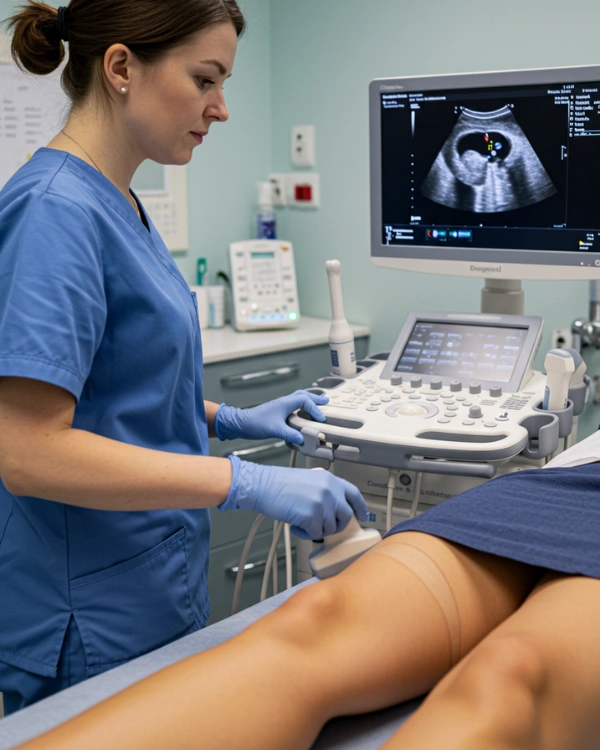
This scan uses Doppler ultrasound technology to evaluate:
- Blood flow through deep veins of the thigh, calf, and popliteal regions
- Compressibility of veins (a key indicator of DVT)
- Presence of blood clots (acute or chronic)
- Signs of post-thrombotic syndrome or venous insufficiency
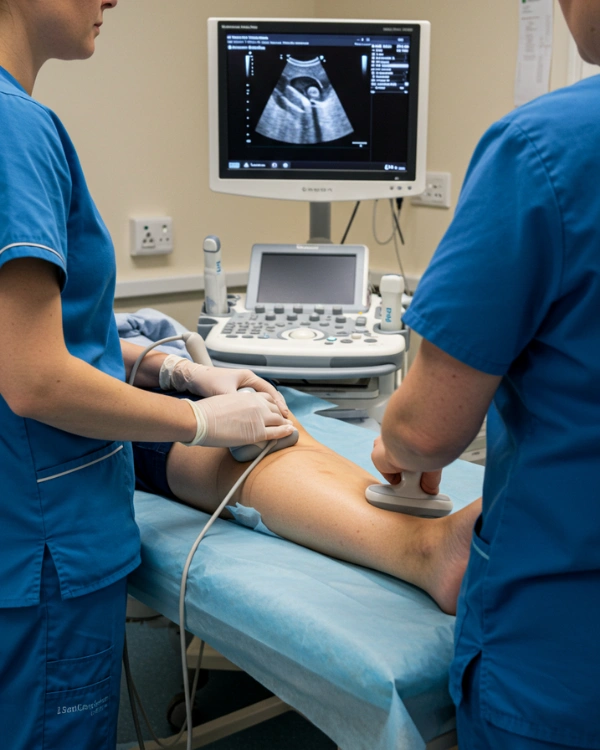
It may be performed on one leg (unilateral) or both legs (bilateral), based on symptoms.
Why consider a private DVT scan?
You may benefit from this scan if you have:
- Unexplained leg swelling or pain
- Recent long travel, surgery, or immobilisation
- History or family history of clots, thrombophilia, or varicose veins
- Signs of DVT or vascular insufficiency
- Pregnancy-related swelling or postnatal symptoms
Advantages of private ultrasound:
- No radiation exposure
- Same-day or urgent appointments
- Consultant sonographer report
- Early diagnosis reduces risk of pulmonary embolism
- Helps inform anticoagulation treatment
Symptoms or concerns that may require this scan
Consider this scan if you are experiencing:
- Swelling in one leg (often calf or thigh)
- Pain or tenderness in the calf or groin
- Redness or warmth in the limb
- Visible engorged veins or heaviness in the leg
- Shortness of breath (suggesting risk of clot travel)
- History of trauma, long flights, or surgery
What can this ultrasound detect?
- Deep vein thrombosis (DVT) – acute or chronic
- Venous insufficiency or reflux
- Post-thrombotic changes or scarring
- Obstruction of flow or poor compressibility
- Non-thrombotic venous abnormalities
- Residual thrombus or recurrence after treatment
Preparing for your lower limb Doppler scan
Preparation instructions:
- No fasting or bladder preparation needed
- Wear loose trousers or shorts for easy access to legs
- Scan duration: ~20–30 minutes depending on single or both legs
Inform the team if:
- You are taking blood thinners
- You’ve had recent leg surgery, injury, or trauma
- You have risk factors for DVT (e.g. pregnancy, immobility)
How it works
Smarter Scanning. Proactive Health. Peace of Mind.
Choose
Pick a scan or a program. No referral required.
Book
Select a time online - same‑day availability.
Scan
Be seen by specialists in our Bluewater clinic.
Results
Consultant‑led report within 3 working days, accessible online.
Get clarity. Get control.
Cut out long NHS queues, avoid opaque private quotes, and step into a single-visit, consultant-led experience.
